St Gregory's Catholic Primary School
English
English Intent
At St Gregory’s, our English curriculum is designed to ensure that every child develops the knowledge, skills and confidence to communicate effectively and to foster a lifelong love of language and literature. From the earliest stages in Nursery and Reception, we lay strong foundations in communication and language, early reading, and mark making, following the Early Years Statutory Framework, Development Matters (DfE, 2020) and Strong Foundations in the Early Years (DfE, 2024).
As pupils move through Key Stages 1 and 2, our curriculum follows the National Curriculum programmes of study for English, building pupils’ competence in spoken language, reading, writing, and vocabulary. We aim for every child to become an enthusiastic reader, a thoughtful writer, and an articulate speaker who can express ideas clearly and creatively.
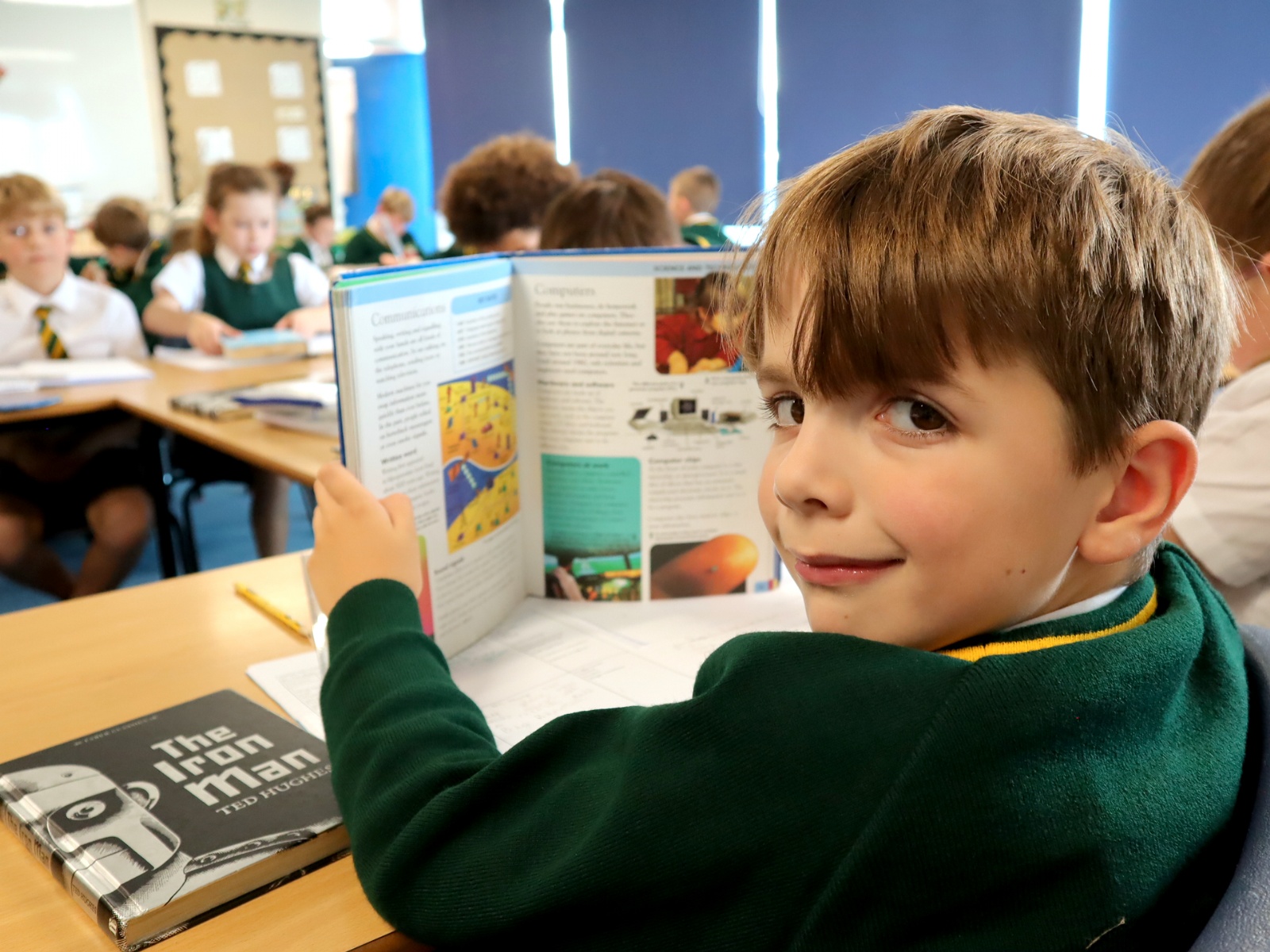
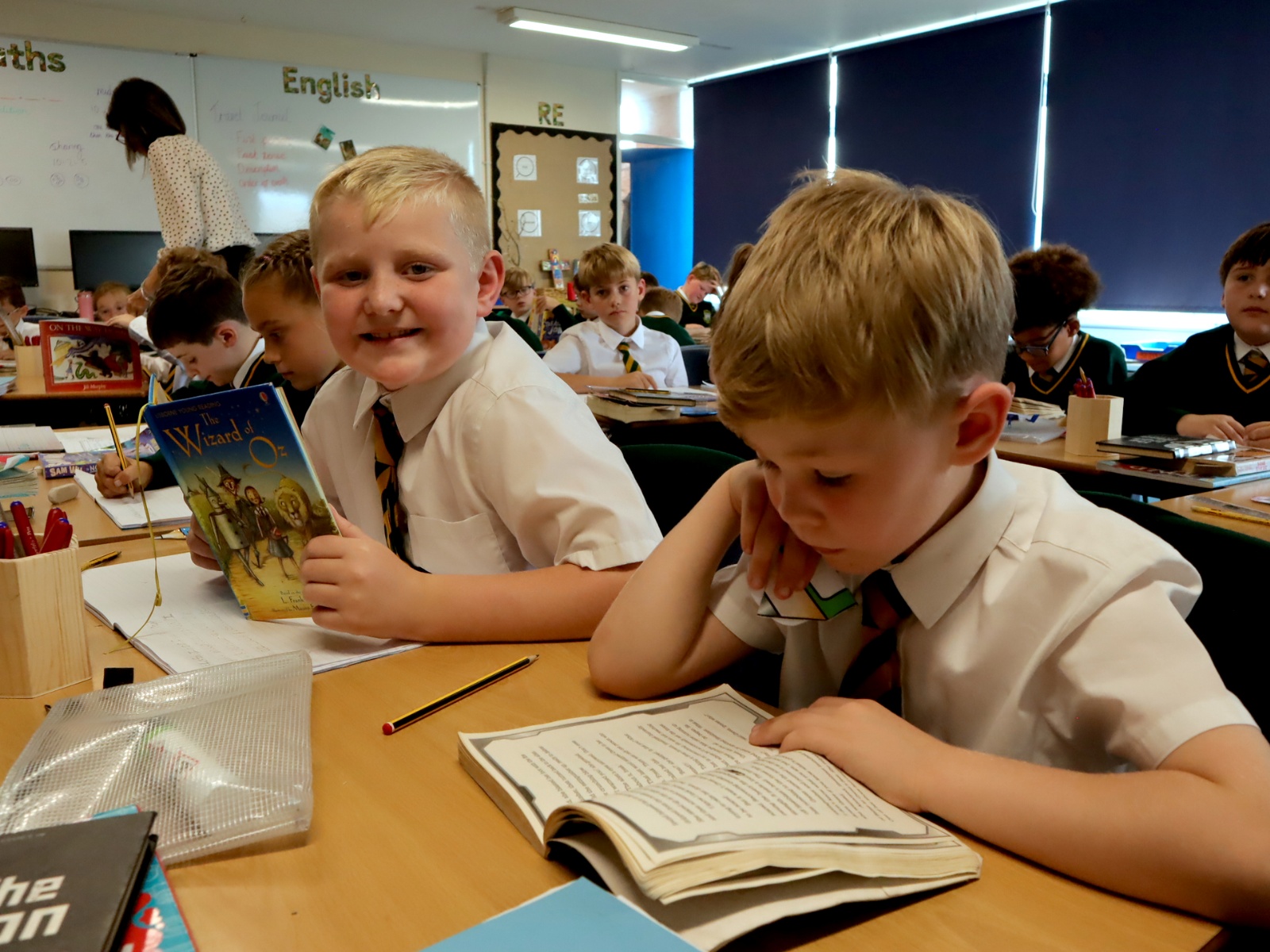
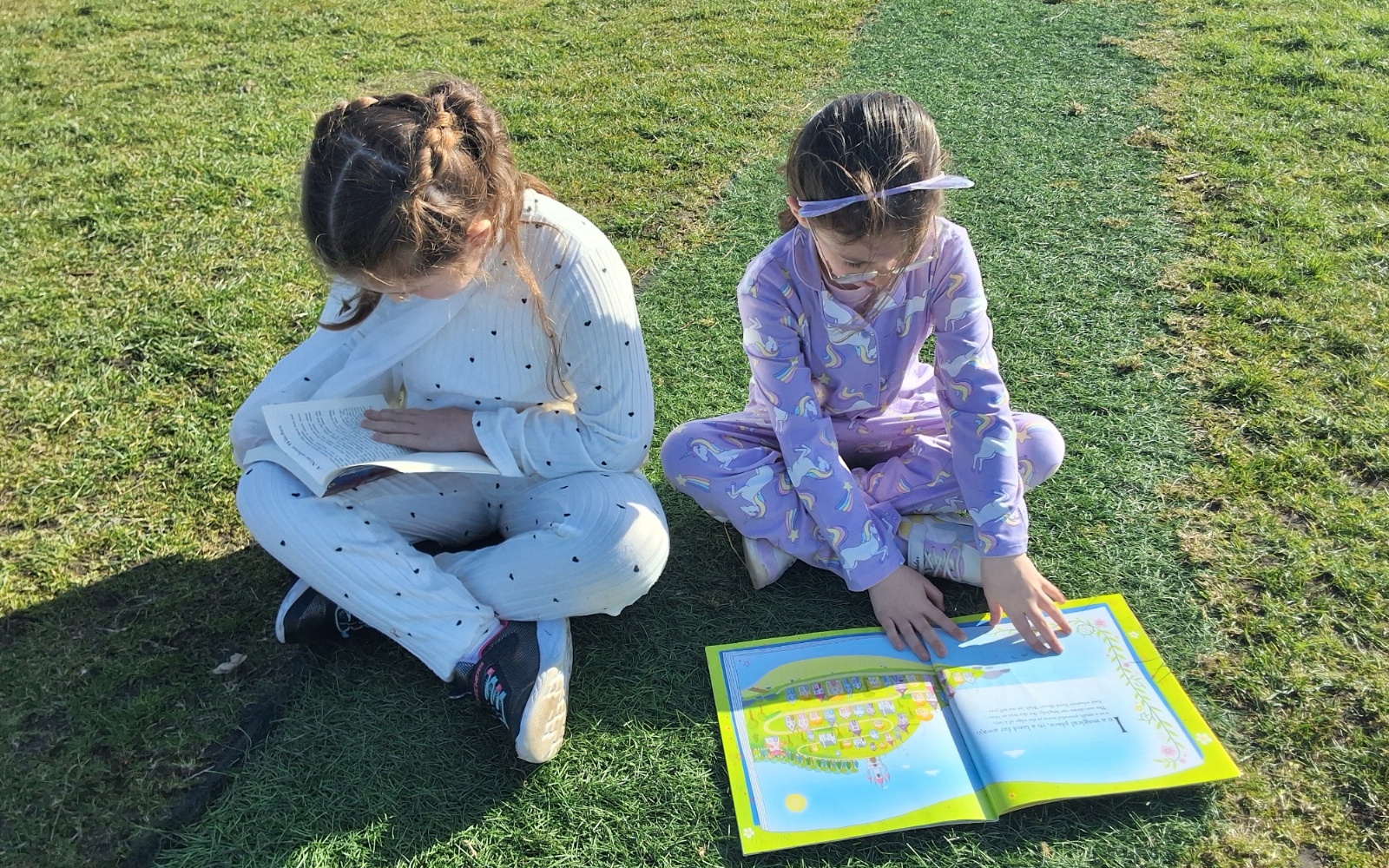
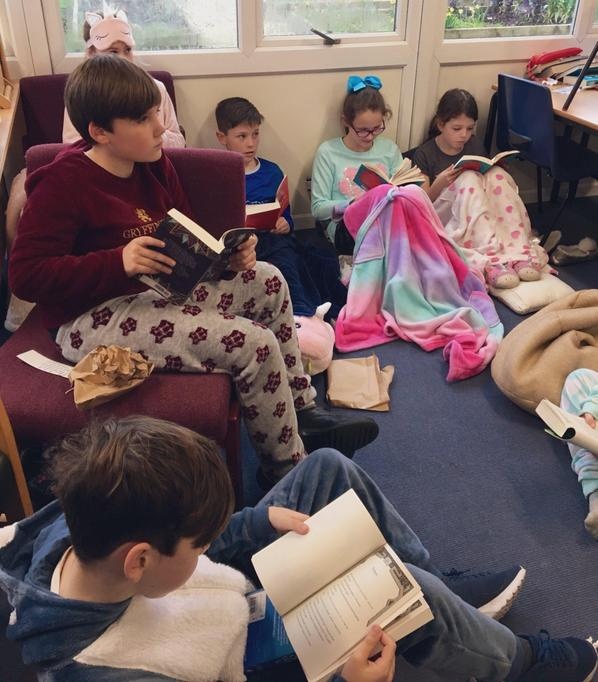
Through exposure to a diverse range of high-quality texts, we nurture imagination, empathy, and curiosity, helping pupils to make meaningful connections across subjects and with the wider world. Our intention is that, by the time they leave St Gregory’s, all pupils are confident, capable communicators—well-prepared for the next stage of their education and for life beyond school.
English Implementation
Our English curriculum is carefully sequenced from Nursery to Year 6 to ensure continuity and progression in all strands of English—speaking and listening, reading, and writing.
-
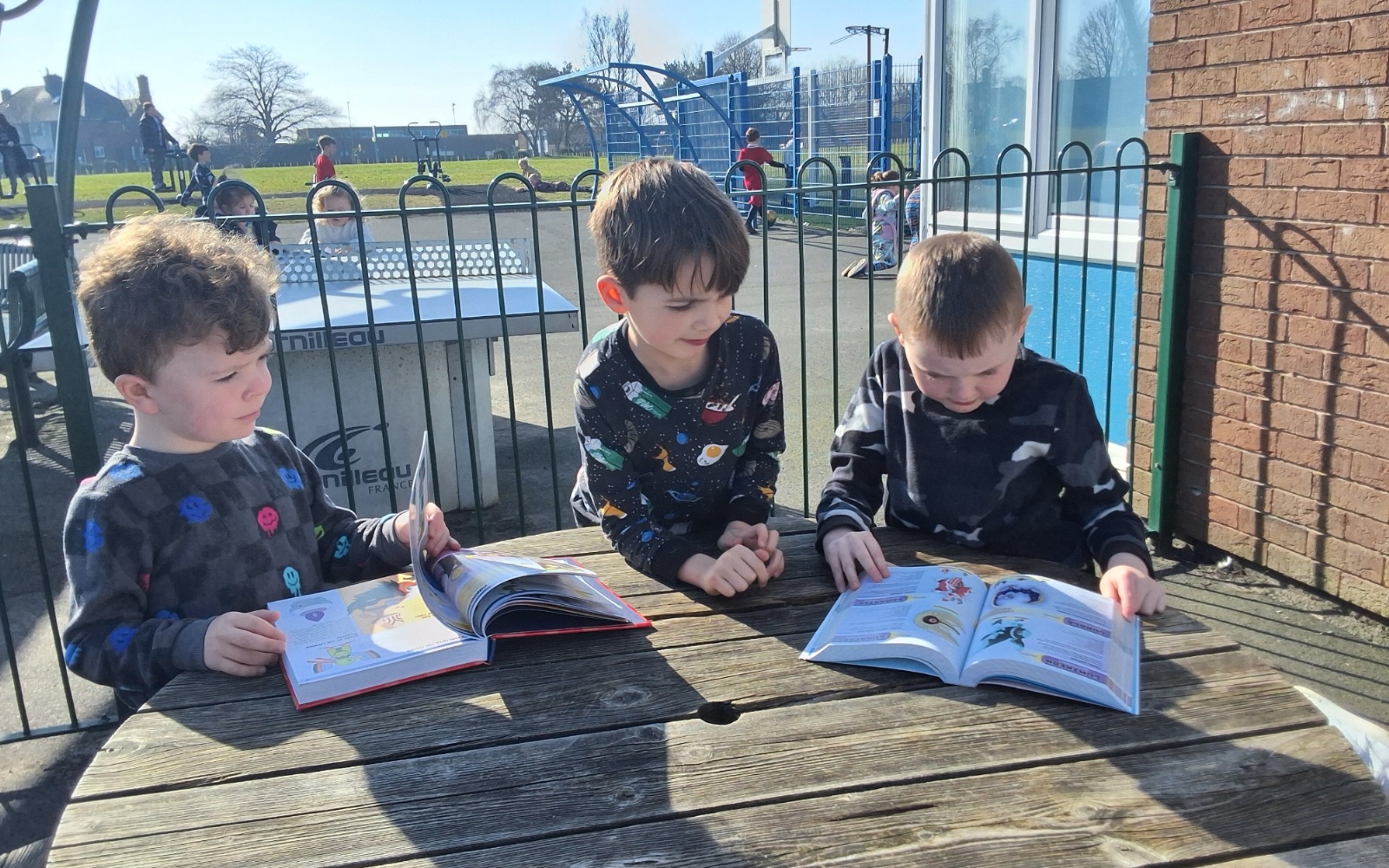
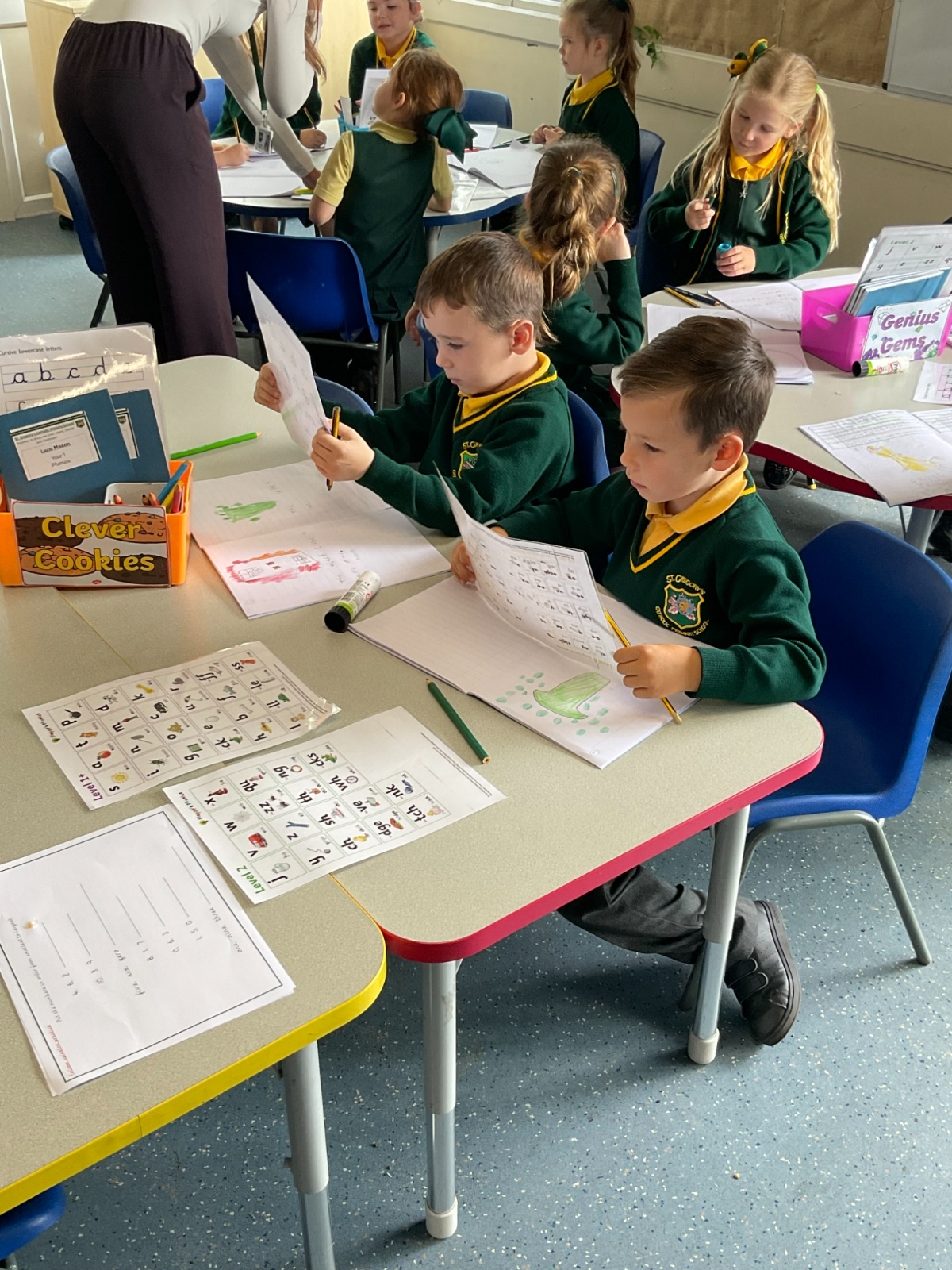
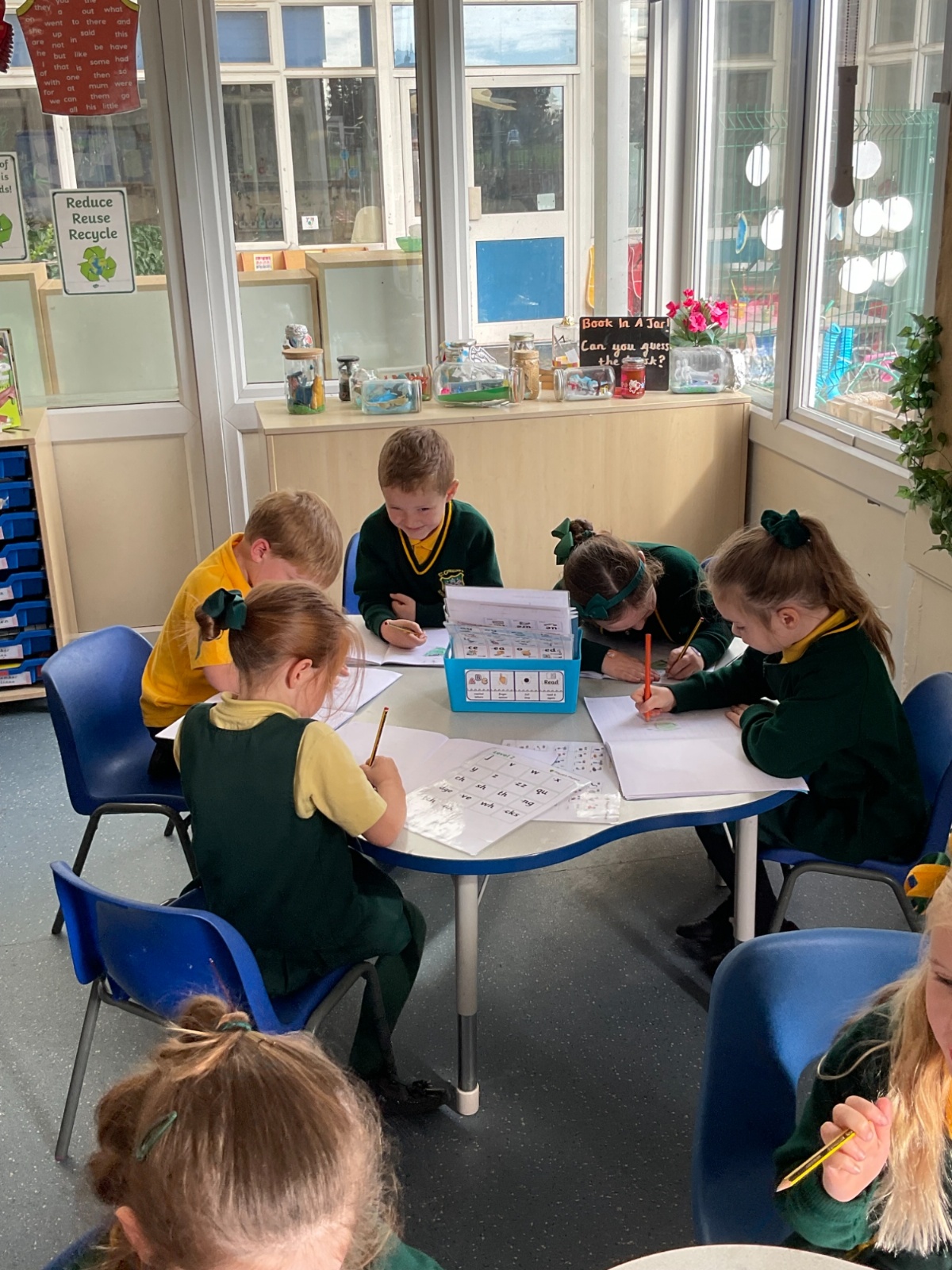
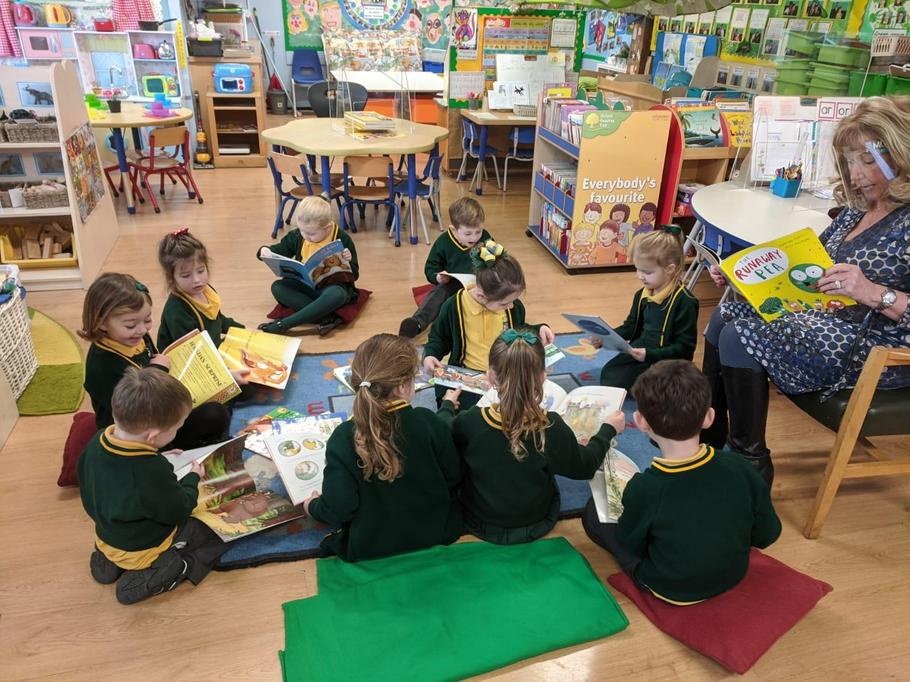
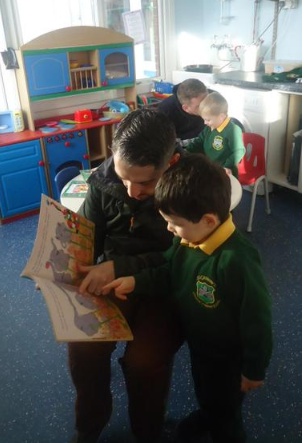
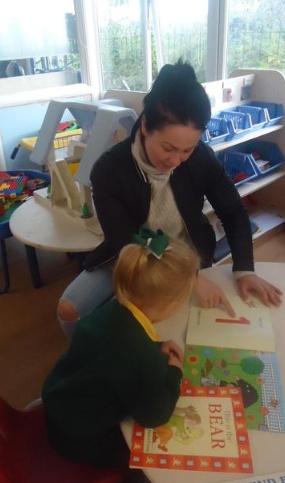
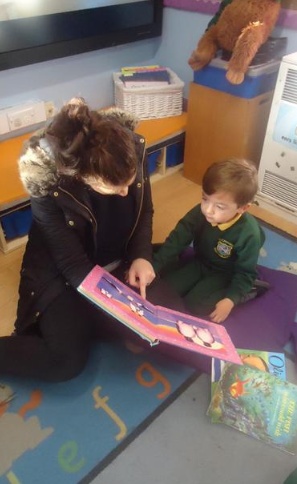
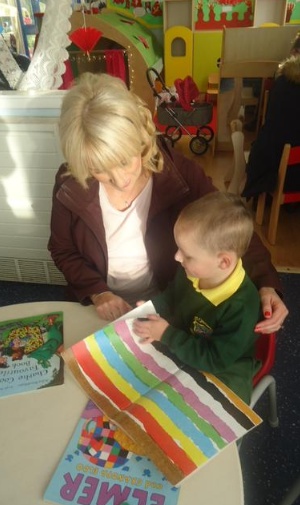
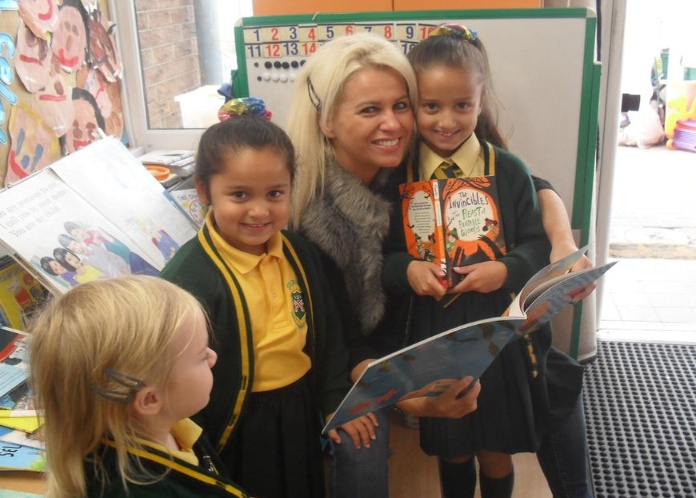
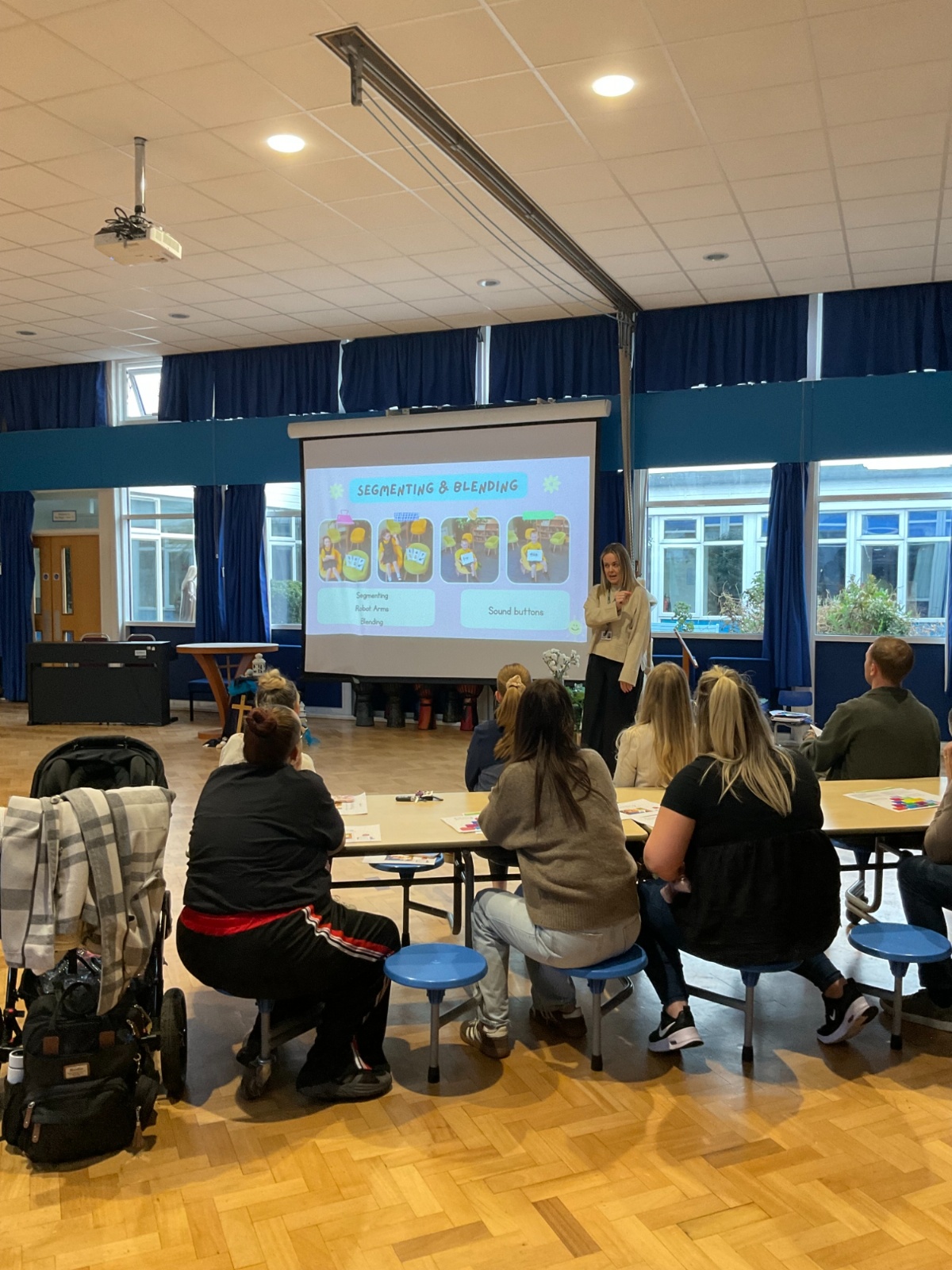
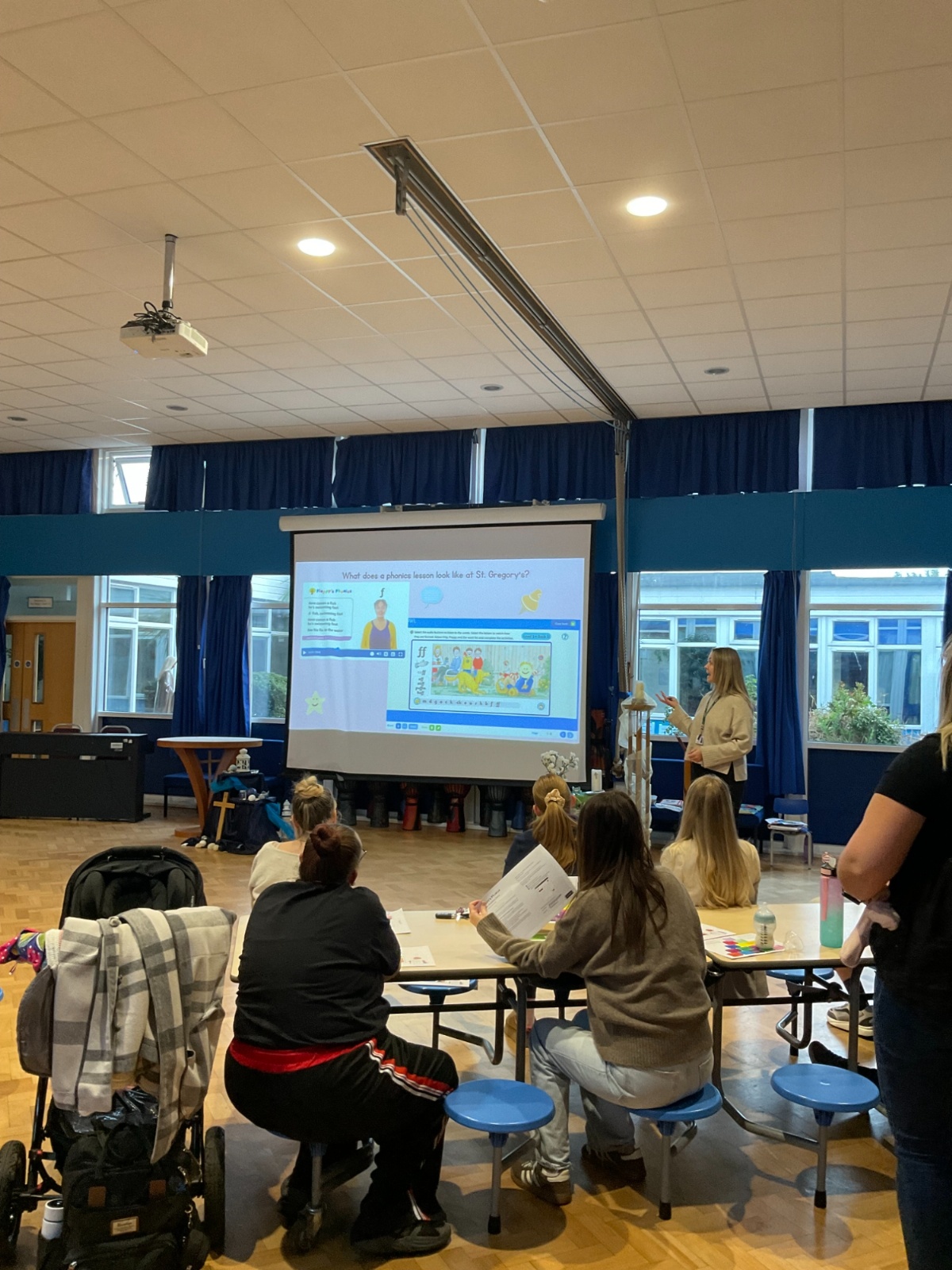
In the Early Years, children develop strong foundations in oral language, phonological awareness and early reading through daily storytelling, singing, rhyme, and high-quality talk. Systematic phonics teaching supports early decoding and reading fluency.
-
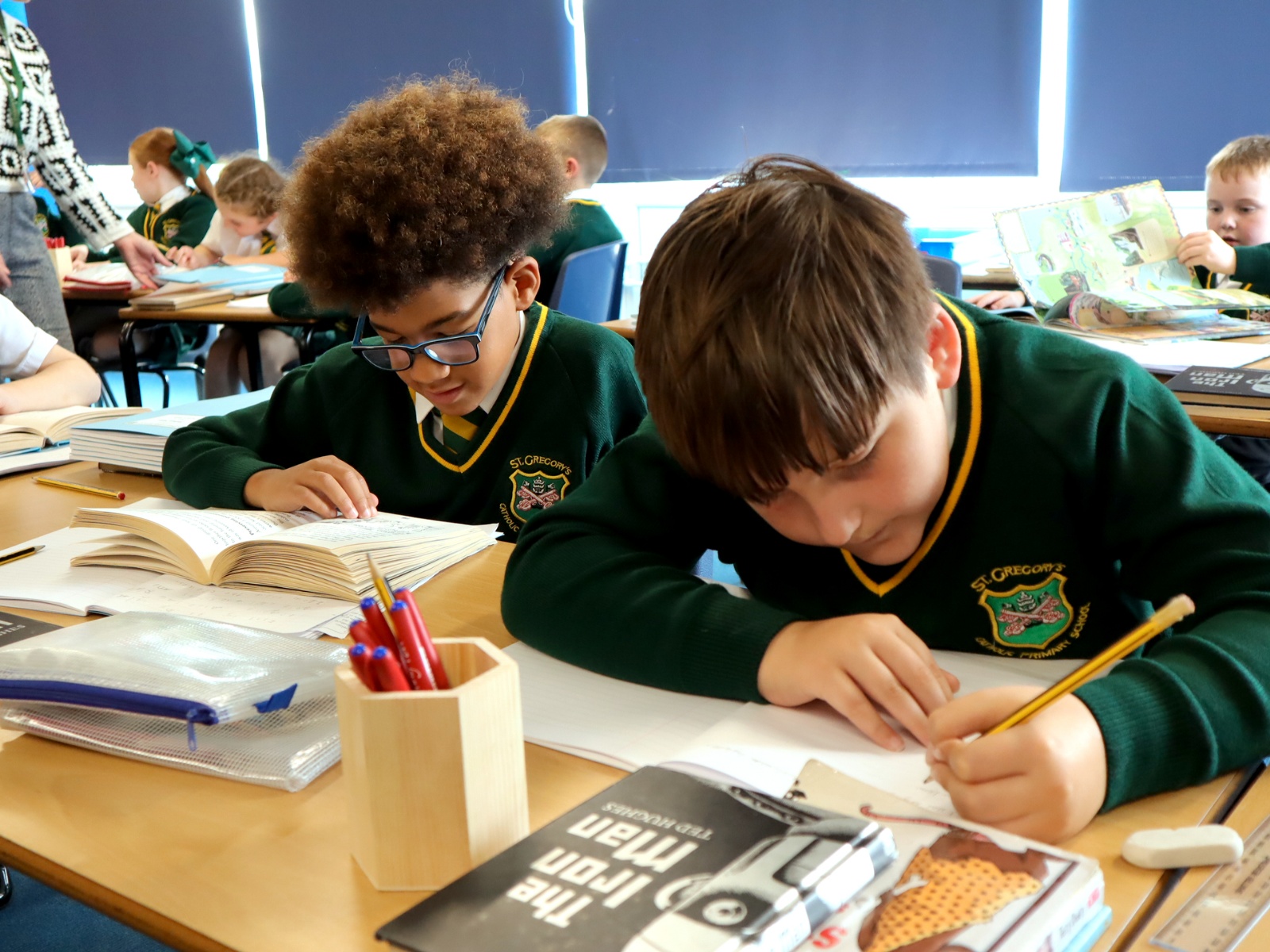
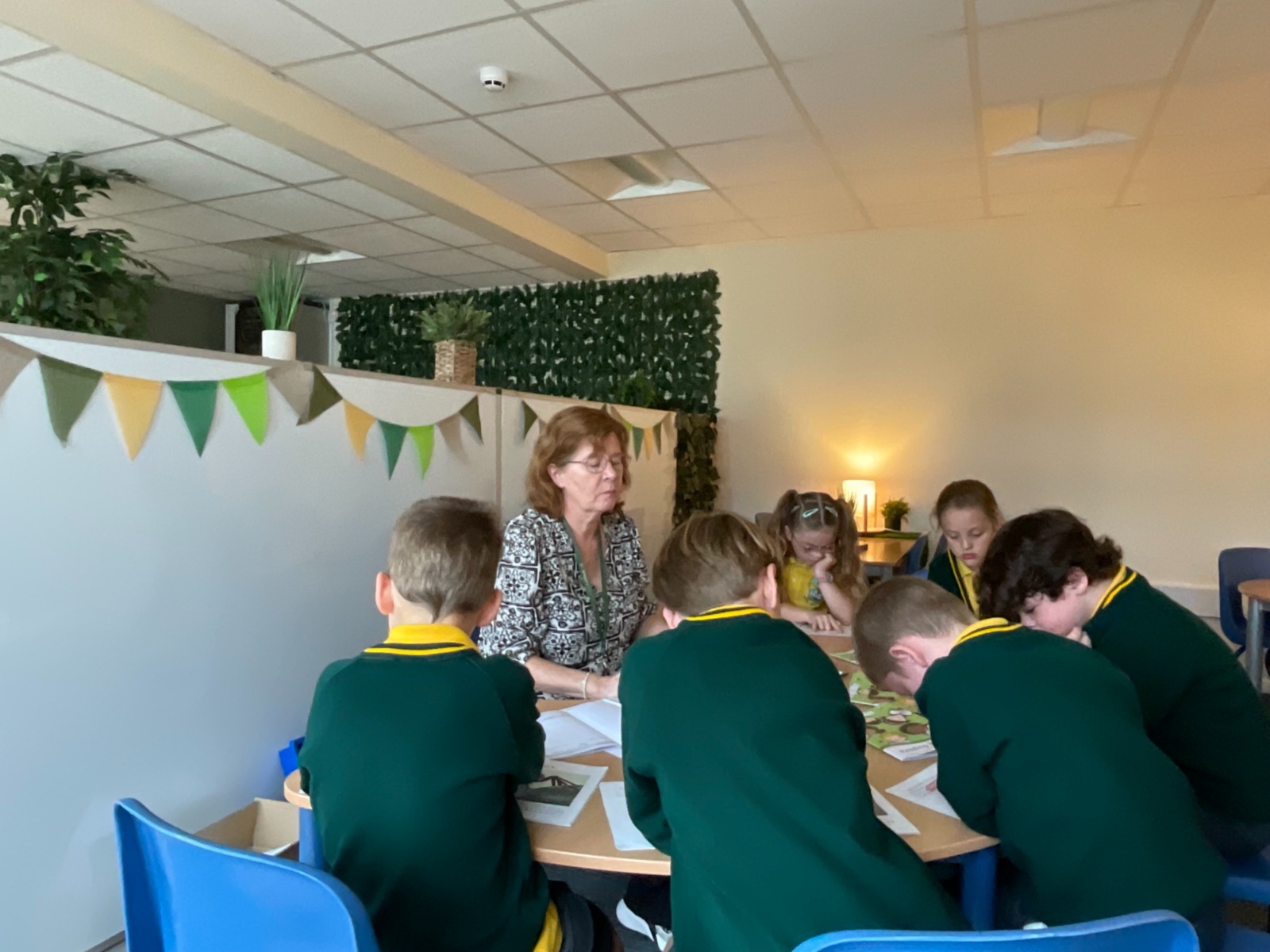
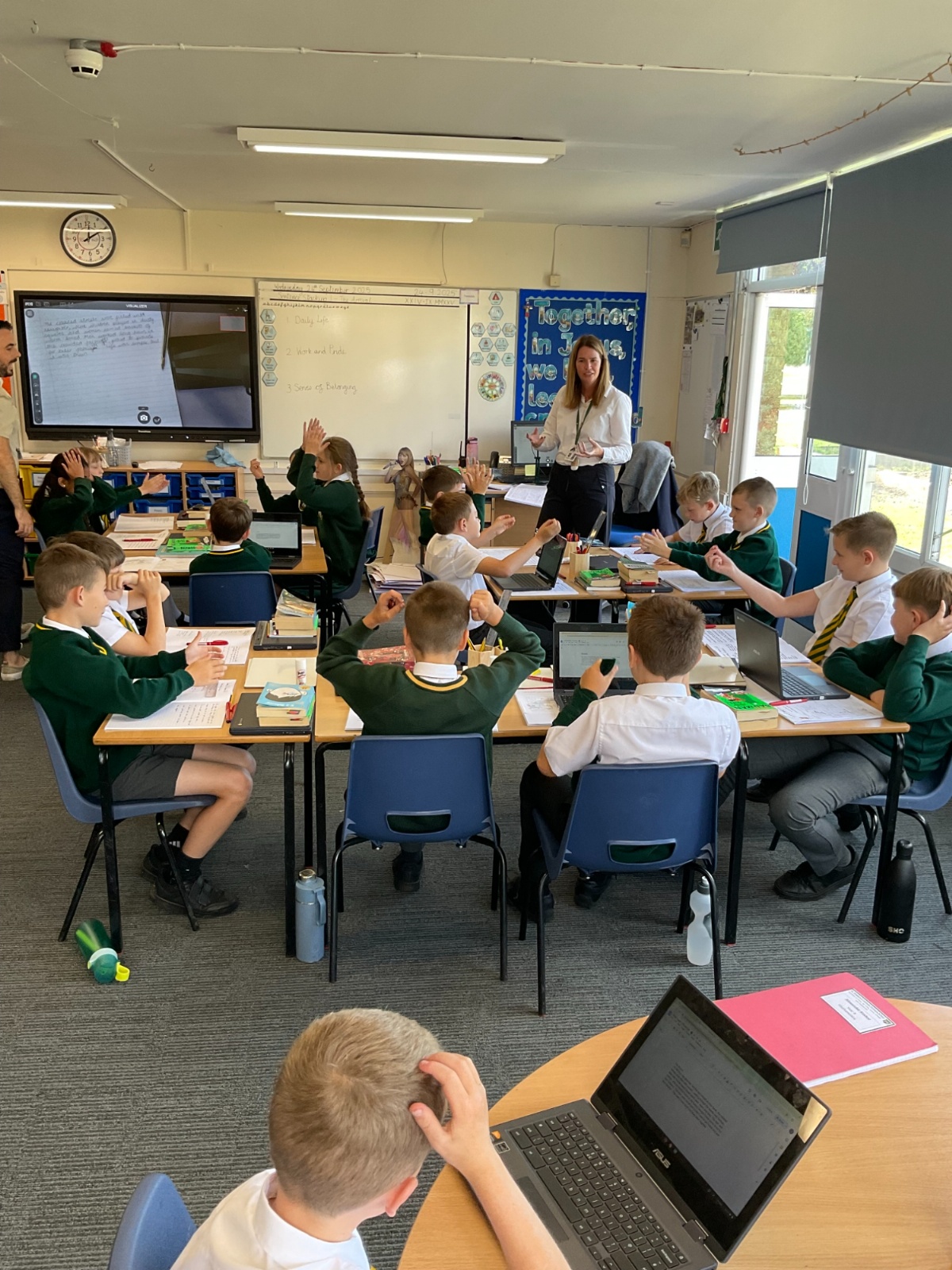
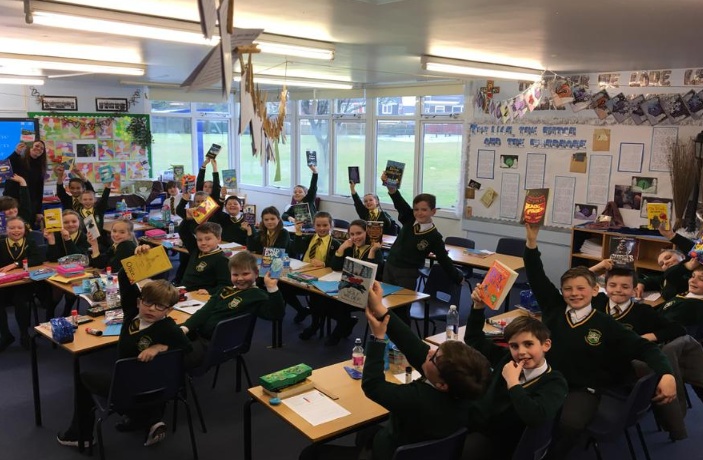
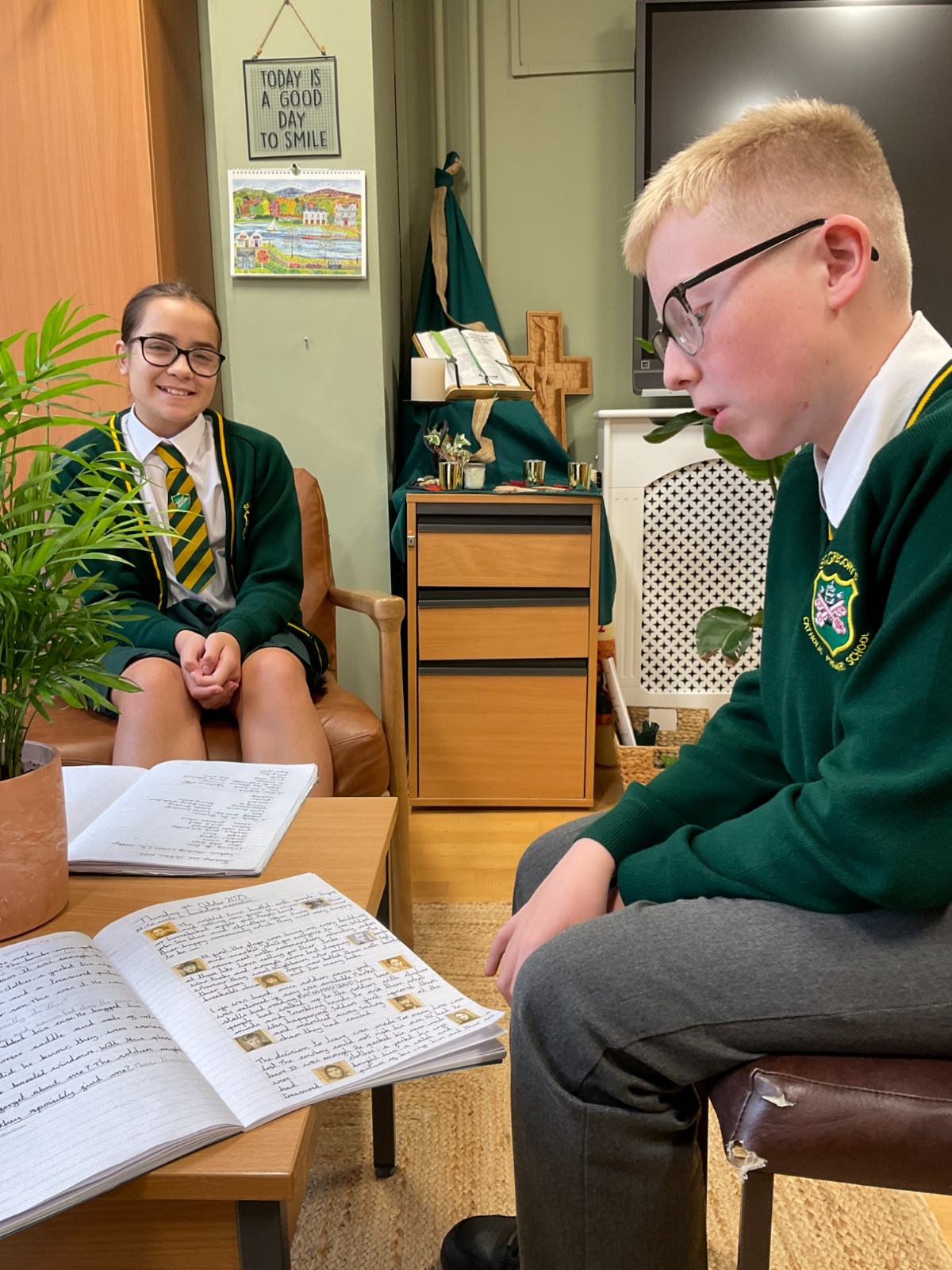
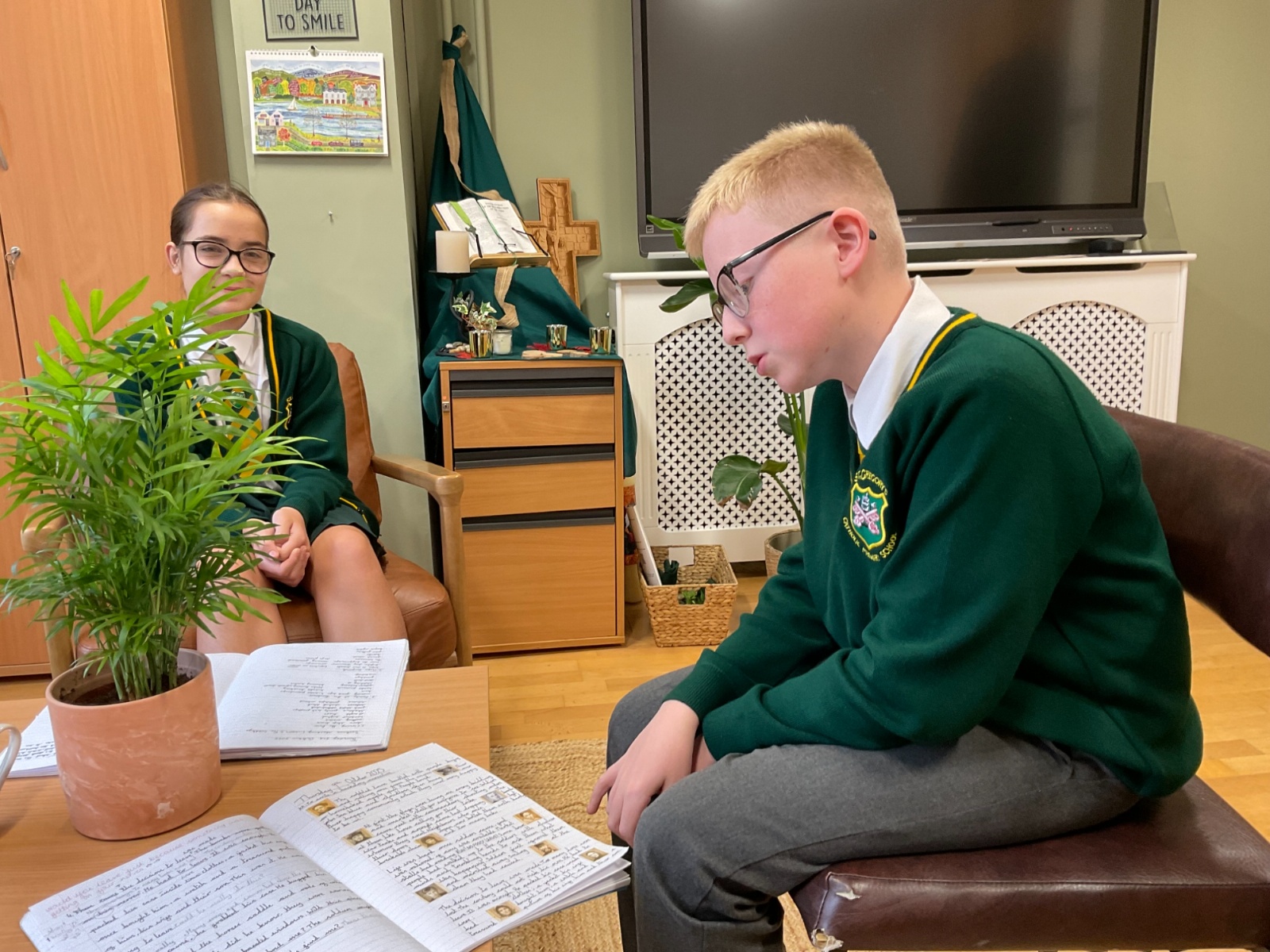
Across Key Stages 1 and 2, learning is centred around high-quality, age-appropriate texts that inspire reading and writing. These texts provide the stimulus for developing key reading comprehension skills, grammatical understanding, and vocabulary acquisition.
-
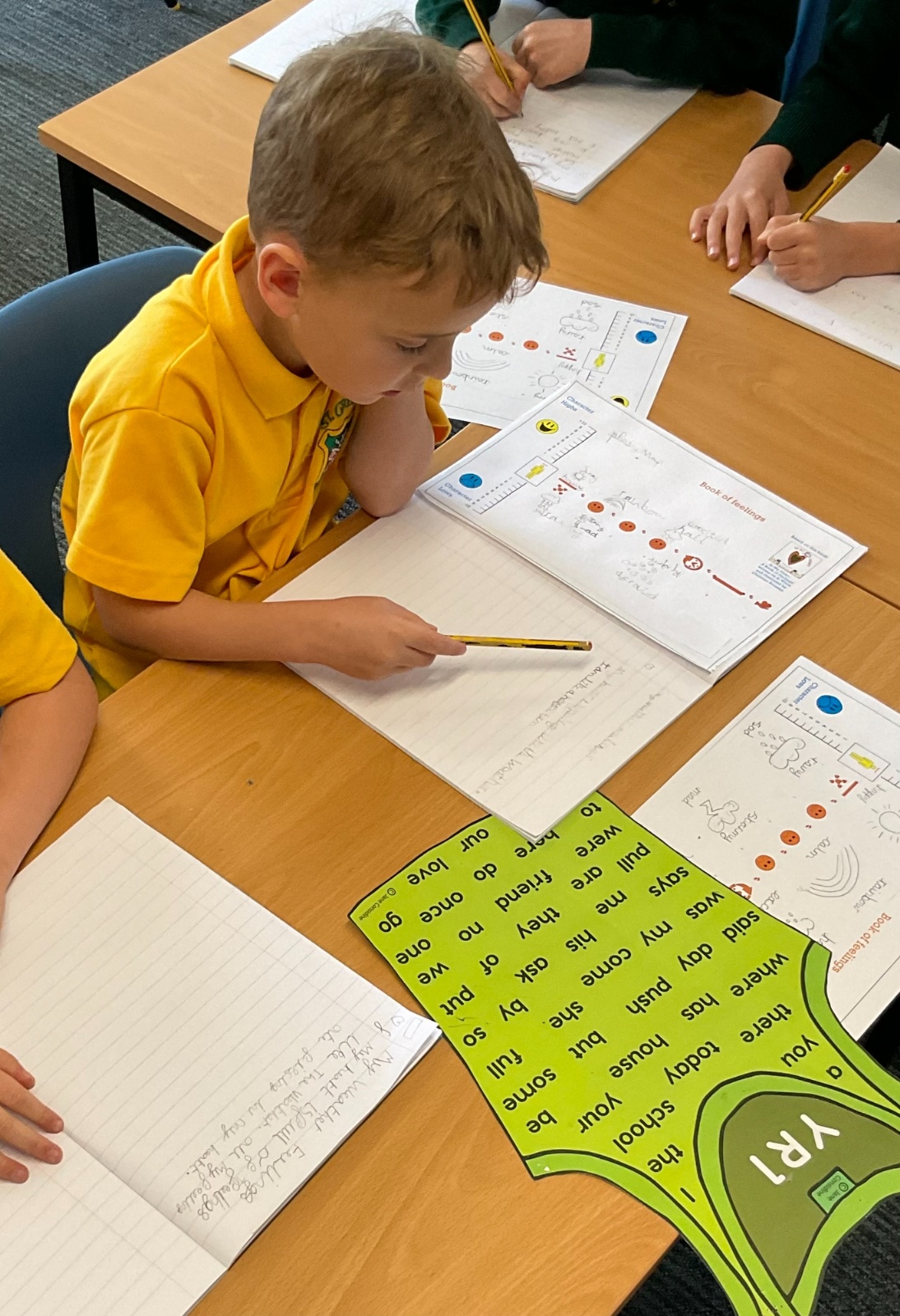
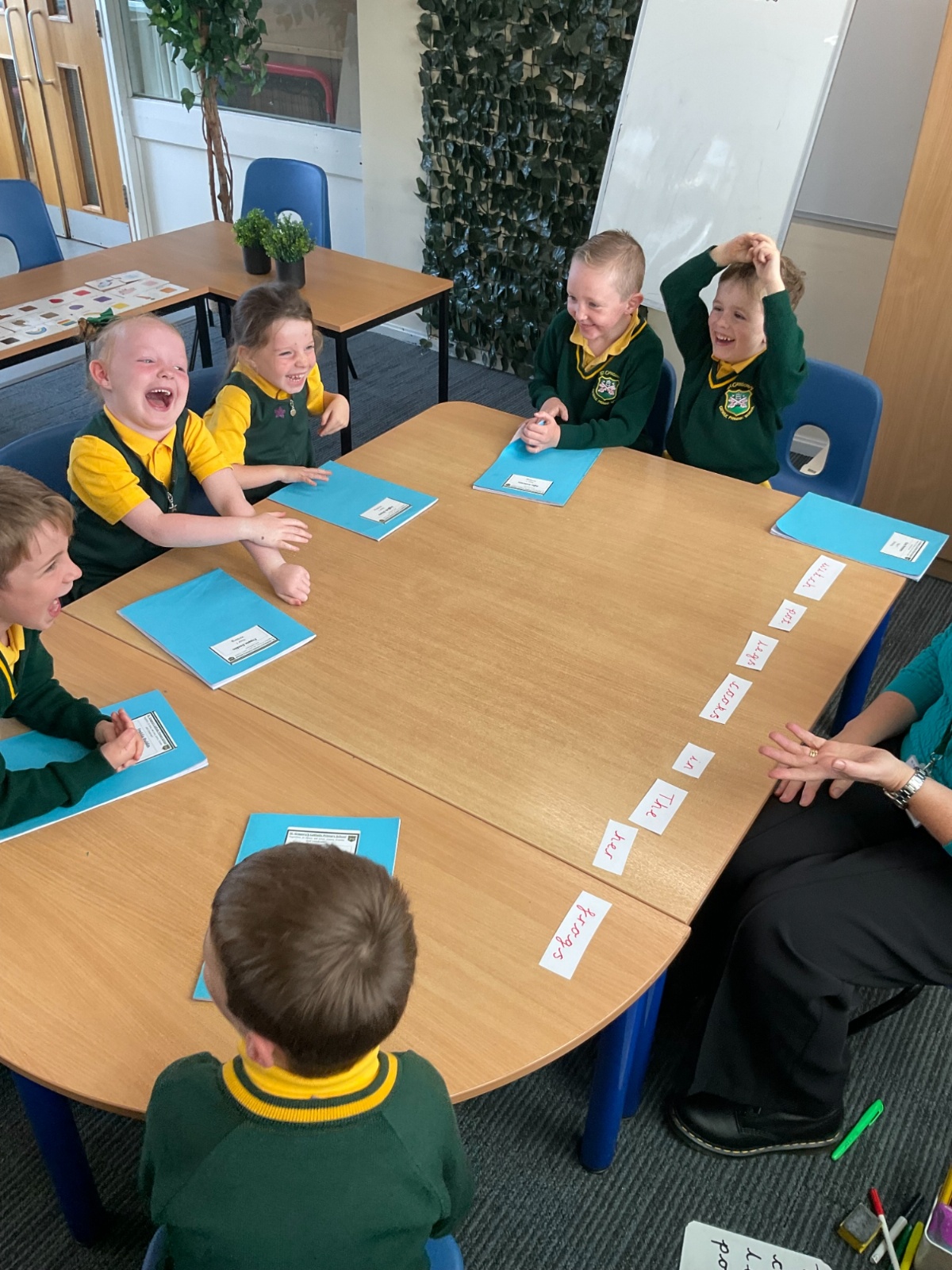
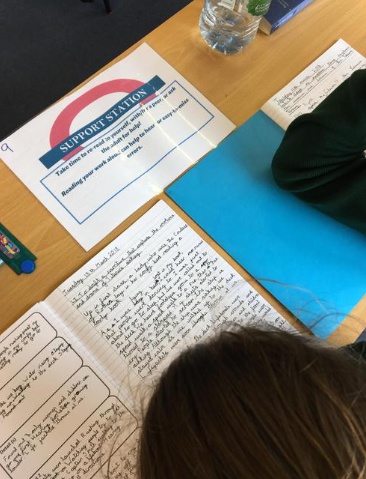
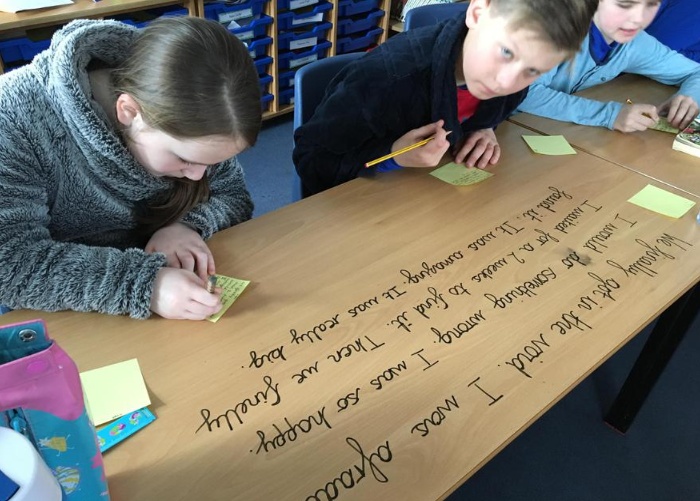
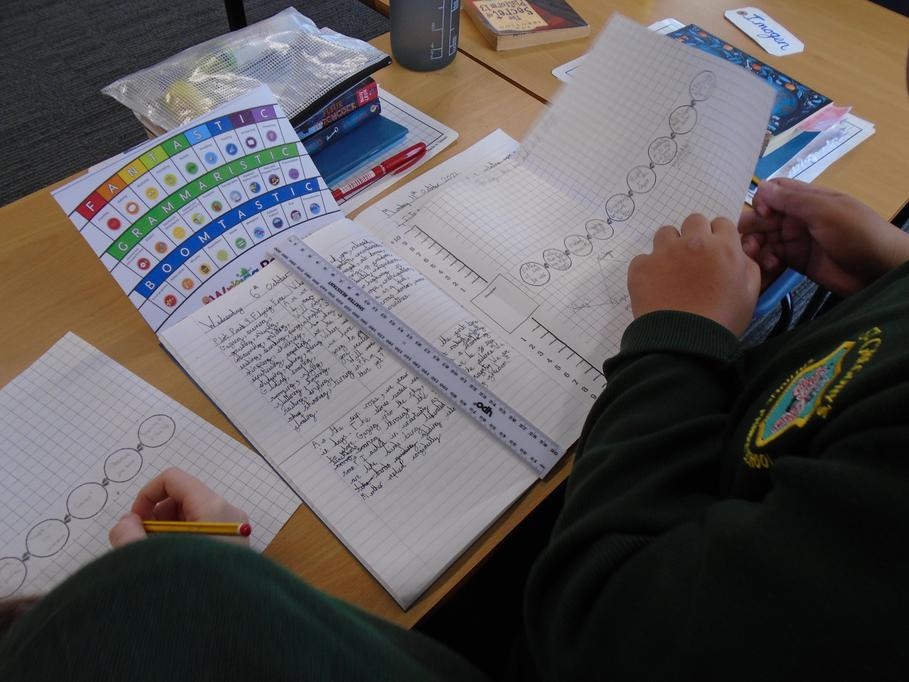
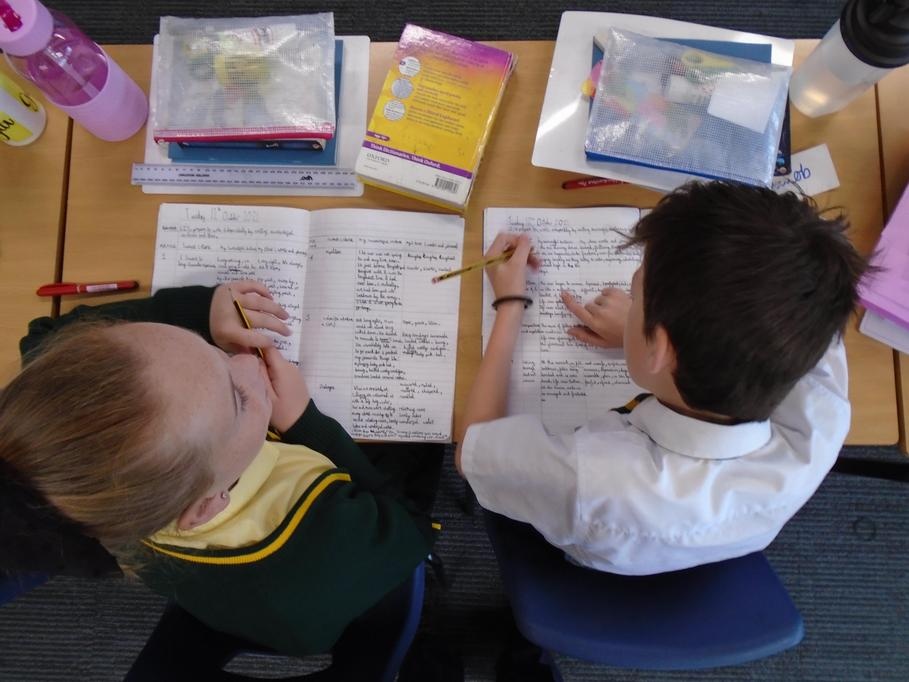
Pupils explore a wide range of genres and purposes for writing, analysing structure, audience, and language features before planning, drafting, and refining their own writing.
-
Teaching explicitly develops knowledge of grammar, punctuation, and spelling, helping pupils to apply these skills confidently across the curriculum.
-
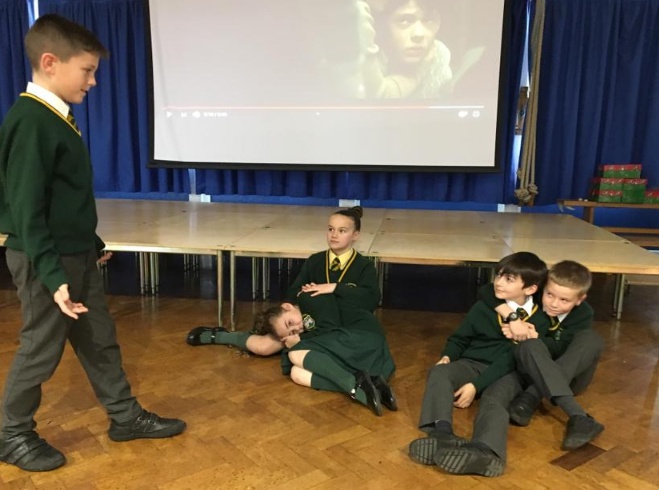
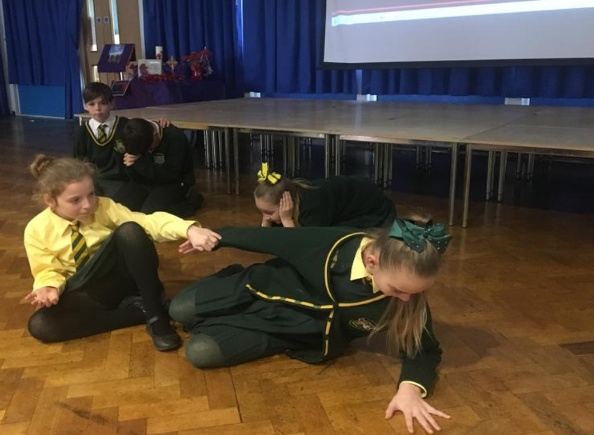
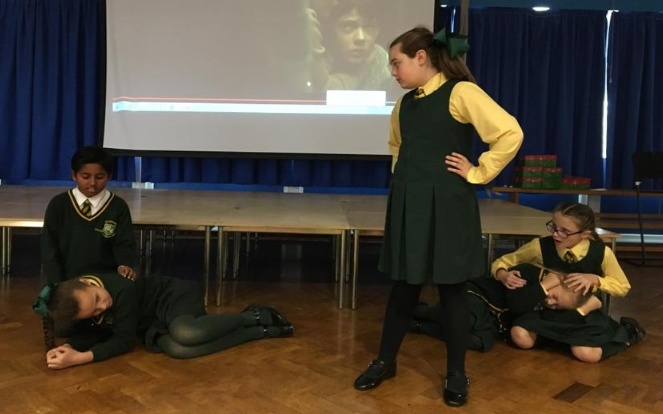
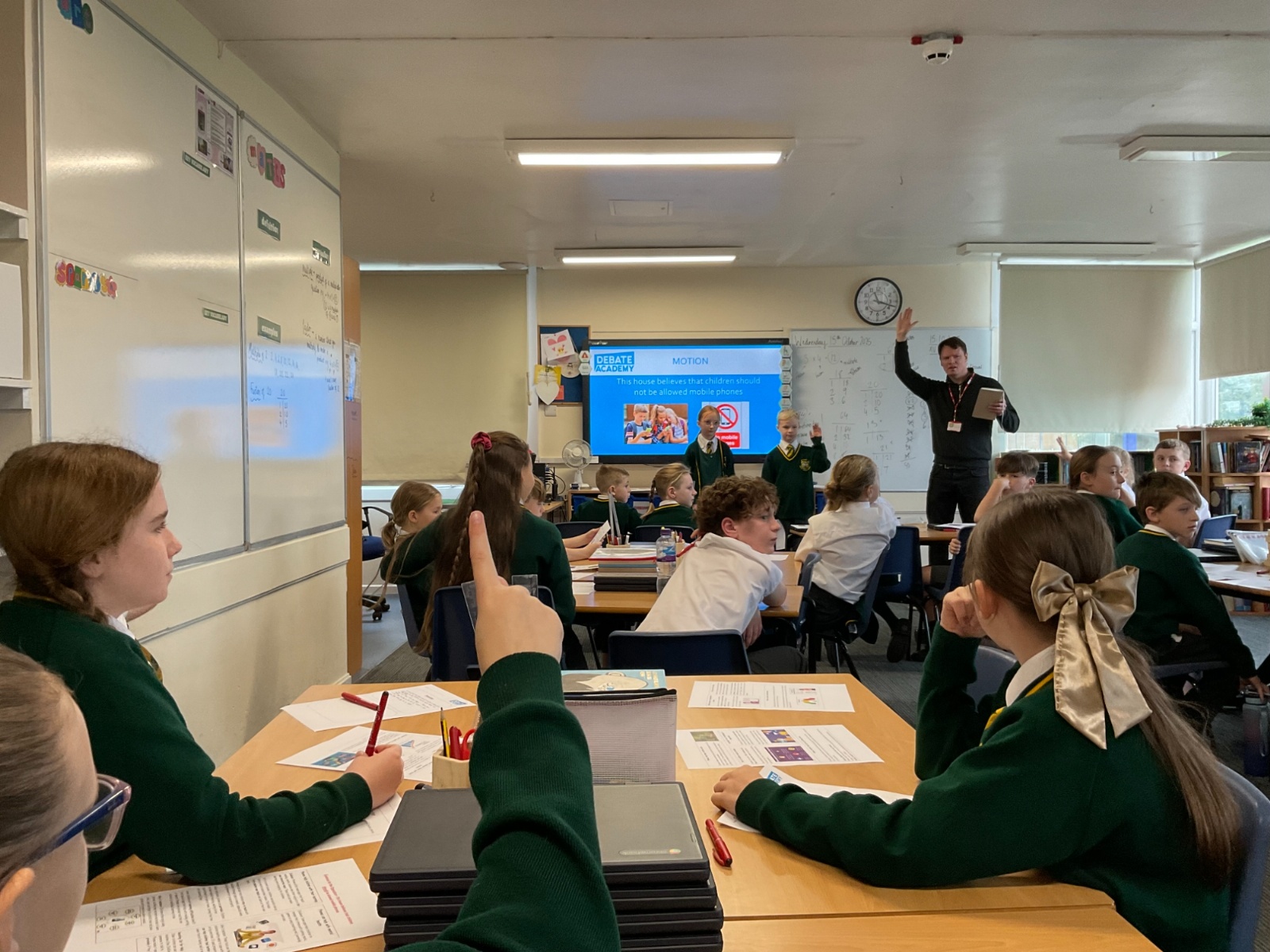
Rich, purposeful opportunities for speaking and listening—through drama, debate, storytelling, and performance—help pupils to develop fluency, confidence, and precision in spoken language.
-
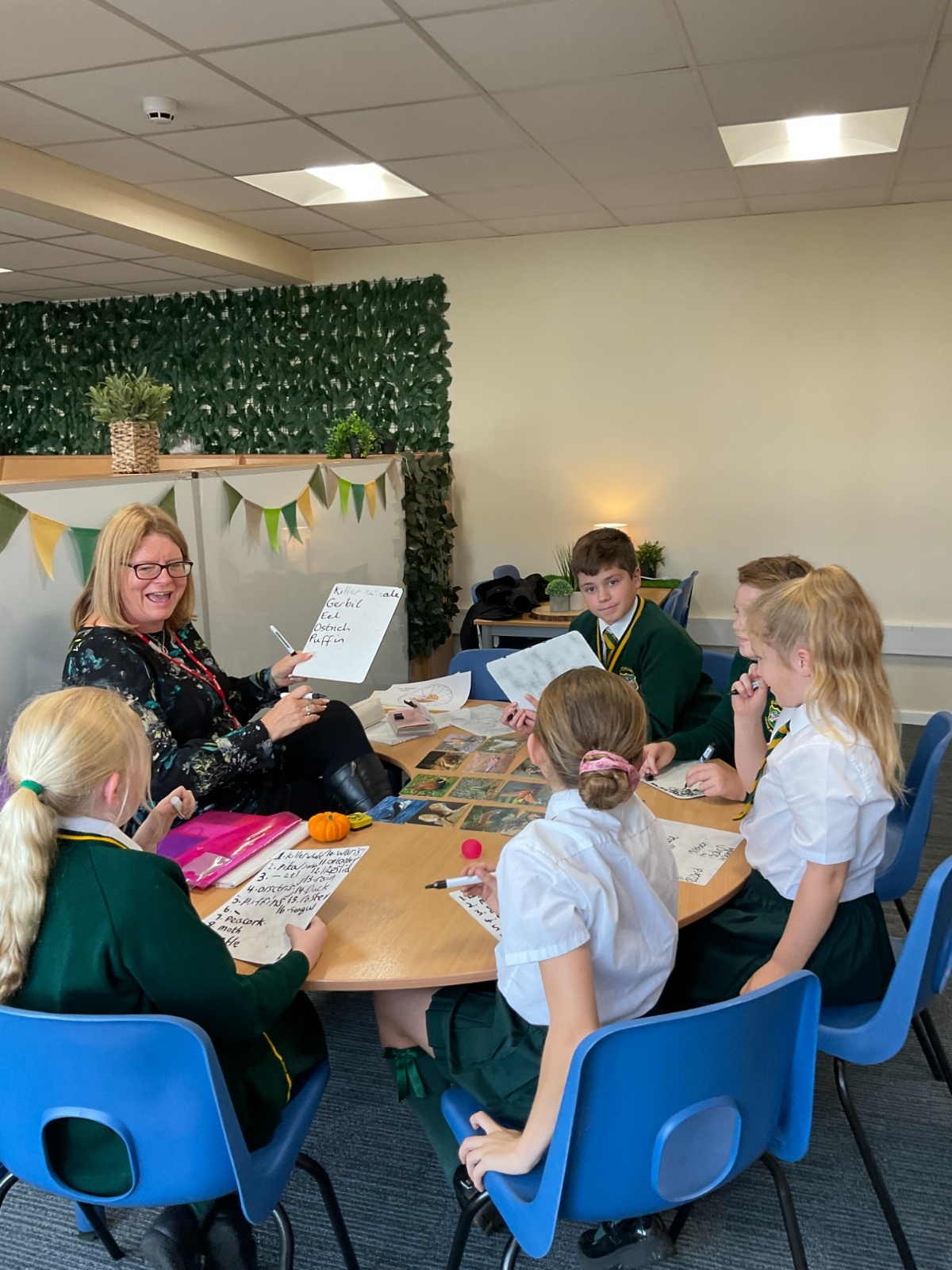
Vocabulary development is embedded across all subjects through the use of knowledge organisers, working walls, and explicit teaching of subject-specific language.
We set ambitious expectations for all pupils, providing support and challenge so that every child can achieve their potential, regardless of their starting point.
English Impact
Through our English curriculum, pupils make strong progress from their individual starting points. Attainment in reading, writing, and spoken language is monitored through ongoing formative assessment, termly summative assessments, and statutory assessments at the end of each key stage.
By the end of their time at St Gregory’s, pupils:
-
read fluently, with understanding and enjoyment;
-
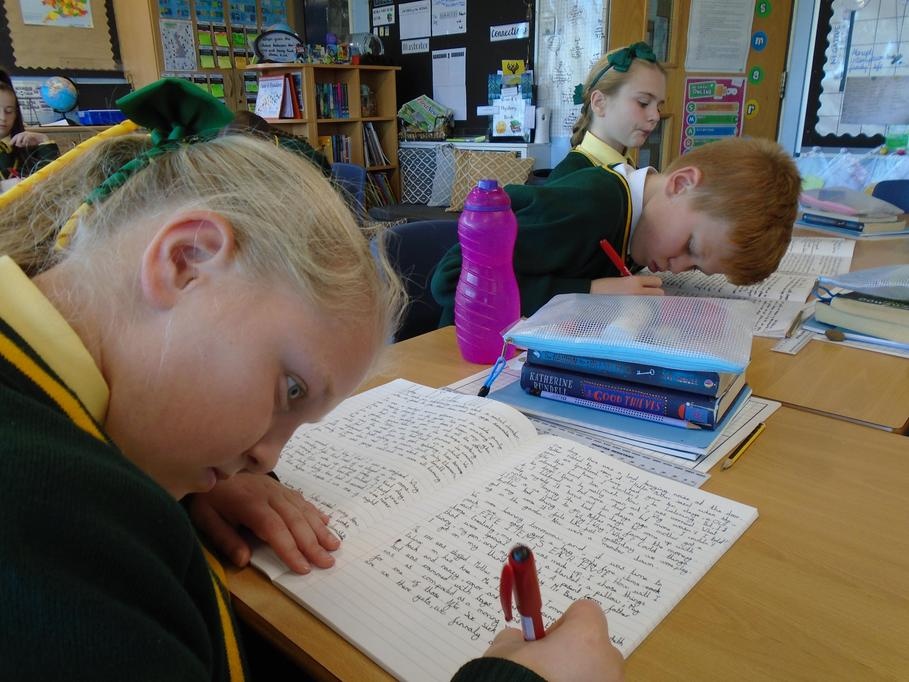
write clearly, accurately and imaginatively for a range of purposes and audiences;
-
use rich and ambitious vocabulary with confidence;
-
listen attentively and speak articulately in different contexts.
Our pupils leave St Gregory’s as confident communicators and enthusiastic learners, well-prepared for the demands of secondary education and equipped with the literacy skills they need to thrive in the wider world.
2025 Education Endowment Foundation Trial
This year, Year 1 are taking part in an exciting research based project with the EEF and the OTTO Club.
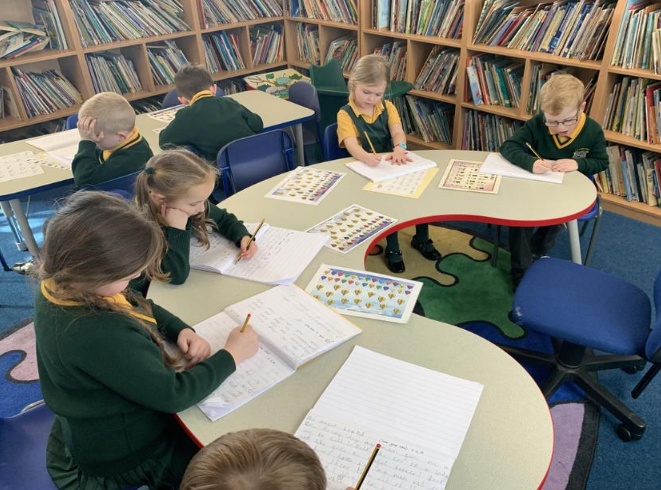
The OTTO Club is a handwriting intervention for Year 1 pupils, developed by Occupational Therapists and designed to improve writing quality through teacher-led sessions. The programme is initially delivered over 10 weeks to the whole class. Schools can then choose to extend it for an additional 10 weeks as a targeted intervention.
The programme includes weekly class-based activities and daily follow-ups focusing on postural stability, fine motor development, and handwriting. Teachers and teaching assistants are supported to deliver sessions, administer assessments, and measure pupil progress.
For more information click the link:
Moving the Box
This year, Reception Class are taking part in an exciting year-long project called, 'Moving the Box'. It is designed to help children achieve GLD (Good Level of Development) at the end of EYFS.
For this project, EYFS staff have identified fine motor skills and writing as our school objective and will be supporting children with a range of carefully selected strategies. Click the link below for more information: